TV2's documentary about people who offer assistance in dying has shocked many. What was uncovered is both gruesome and ethically reprehensible. However, the reactions afterwards show that we still have a moral compass and understand that life is inviolable. That's good! At the same time, the documentary has opened up an important debate about assisted suicide, and it is also a discussion we need to have. But we have to start in the right place.
The question is not just whether we should allow assisted suicide. The question is what kind of view of humanity we want to build our society on. What does it say about us if, when faced with vulnerable people, we offer death instead of care?
We have forgotten what it means to be human.
The problem, as I see it, is that we have lost our understanding of what it means to be human. We have gradually moved towards a perception of the individual as independent and autonomous, where needing others is considered a weakness. But this is a misunderstanding of human nature.
Dependence is not an aberration – it is the very core of being human. From the first breath we are dependent on others. As infants we survive only because someone takes care of us. We grow up in community and are interdependent on each other for the rest of our lives. Even the most self-reliant do not live in isolation – we are always part of a community.
When we value independence more than community, we not only change society – we change our view of humanity itself.
When independence becomes more important than care
Today, independence is celebrated, while needing help is often seen as a burden. When we become ill or old, we can easily feel like a problem. Many who consider euthanasia do so not because they want to die, but because they feel worthless in a society that values autonomy over community.
If dignity is defined by the ability to fend for oneself, dependency becomes a defeat. And if we see needing others as worthless, what happens to those who will never be able to be self-reliant? We risk a society where the vulnerable feel unwanted, where help is rejected as an unnecessary prolongation of suffering, and where we leave those who need us to fend for themselves.
We need a new understanding of human dignity
Dependence is not a weakness, but a fundamental part of our nature. Instead of overlooking this, we must recognize that human value lies not in self-reliance, but in being part of a community.
What kind of society do we want to be? One where the vulnerable feel like they have to disappear, or one where human dignity is inviolable and we take responsibility for each other?
What we choose now determines what kind of society we become.
Marianne Brattgjerd,
Academic Director, Health and Research, Kristent Ressurssenter
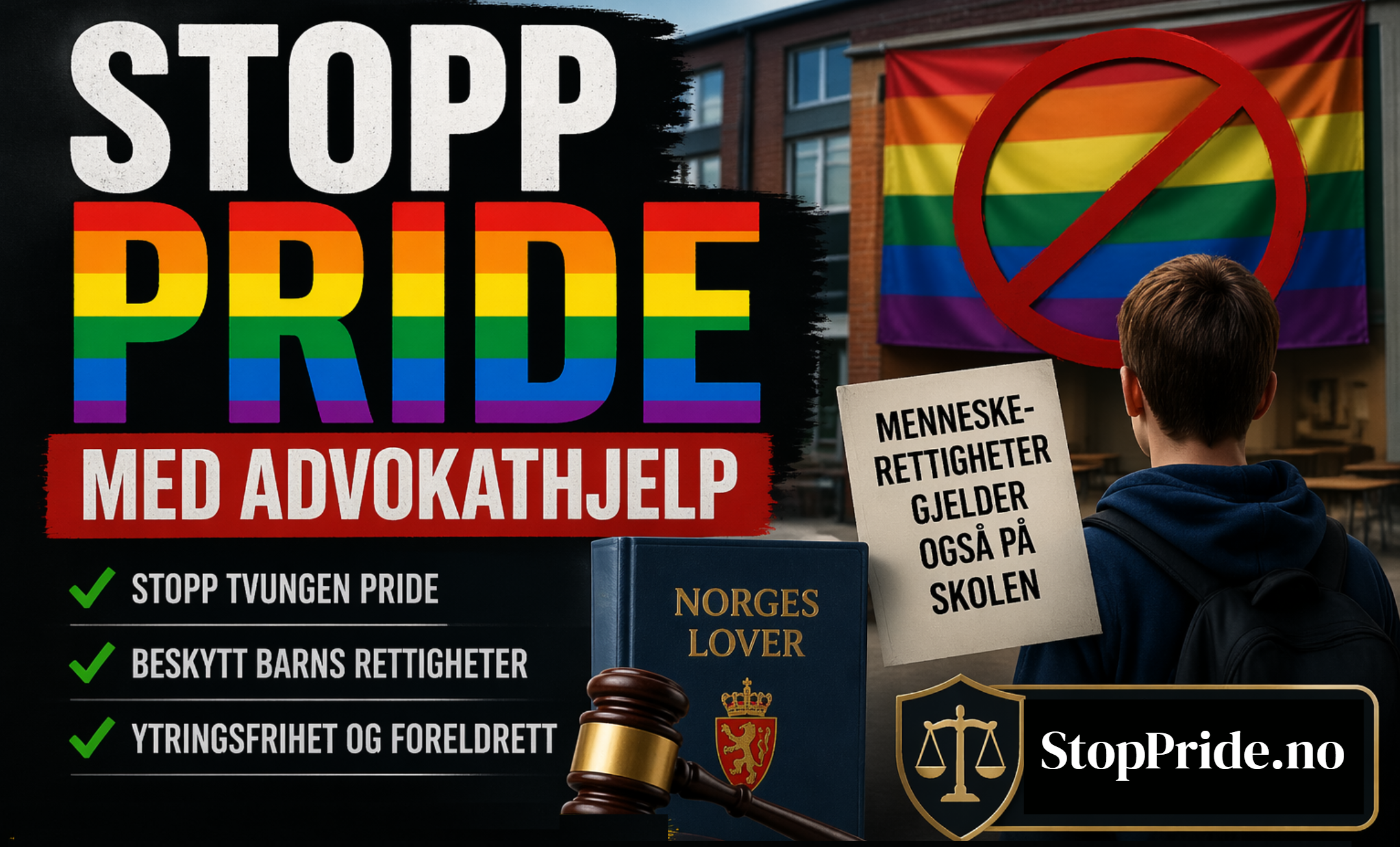
Many parents find that their children become part of pride celebrations at school – often without clear information, without real alternatives and with limited opportunity to make reservations. When…
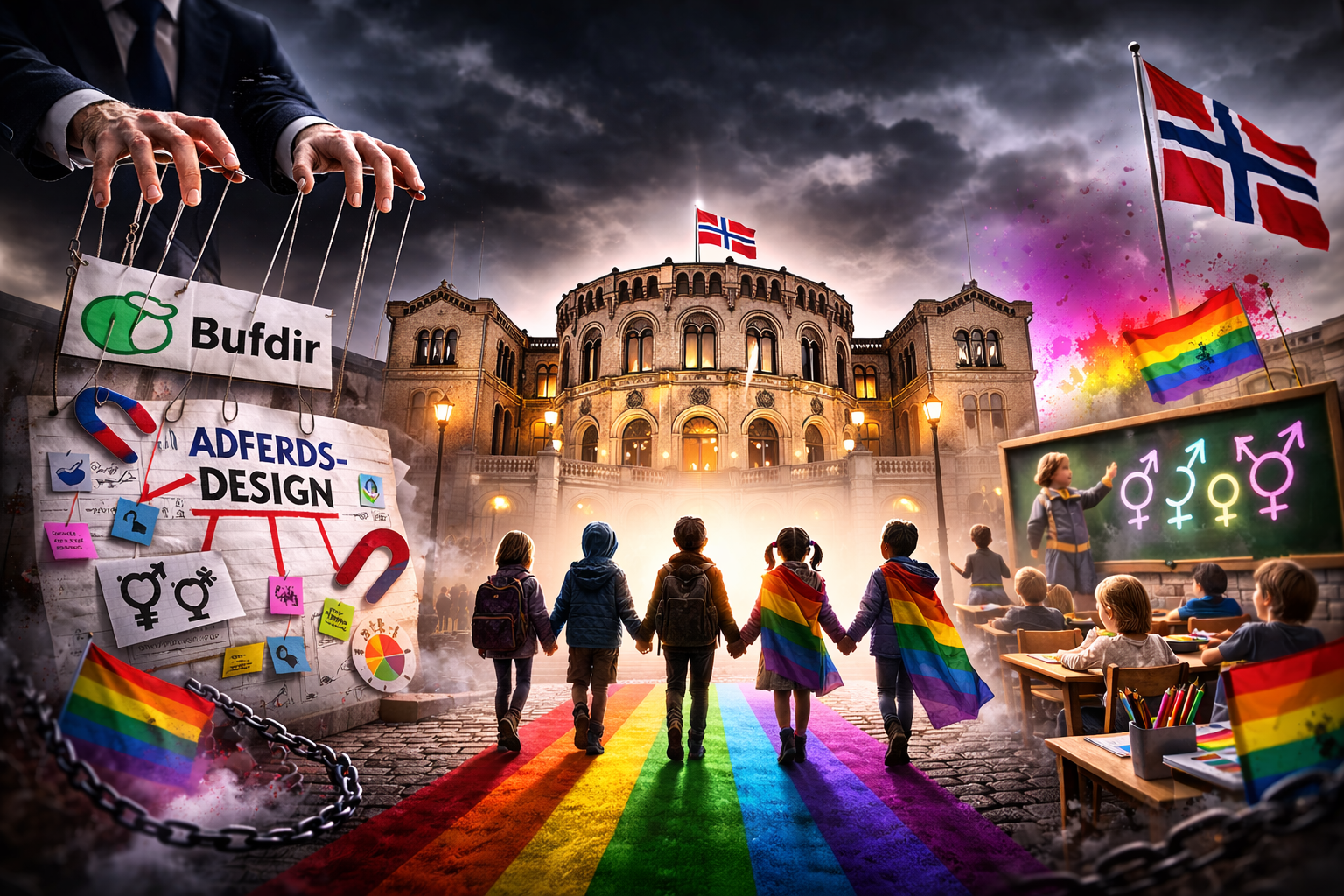
It has recently emerged that Bufdir (the Norwegian Directorate for Children, Youth and Family Affairs) will spend several million kroner on a project in which behavioral design is one of the methods. The goal is to influence public…
Over 1 million people have watched the video where we addressed sexualized activities in kindergartens. Now we follow up with a thorough review of why this is happening – and what food for thought…
There are just over 200 so-called NACS-approved sexologists in Norway who are referred to as experts on gender and sex in the prevailing doctrine that is based on sex-positive philosophy, queer theory and sexually liberal sexology. …
In this podcast episode, Truls Olufsen-Mehus and Tone Lise Gustavsen delve into the complexities of sex education, with a particular focus on new approaches that need to be adopted in the public…
Pornography is often described as a private choice with no consequences for others. In public debate, it is often presented as neutral entertainment, or as an individual need that does not concern the relationship one is in…