BedreSvar.no has been launched
What do we answer when young people ask about love, bodies, sex, identity and gender? We have now launched bedresvar.no – a new Christian website with honest, clear and hopeful answers to…



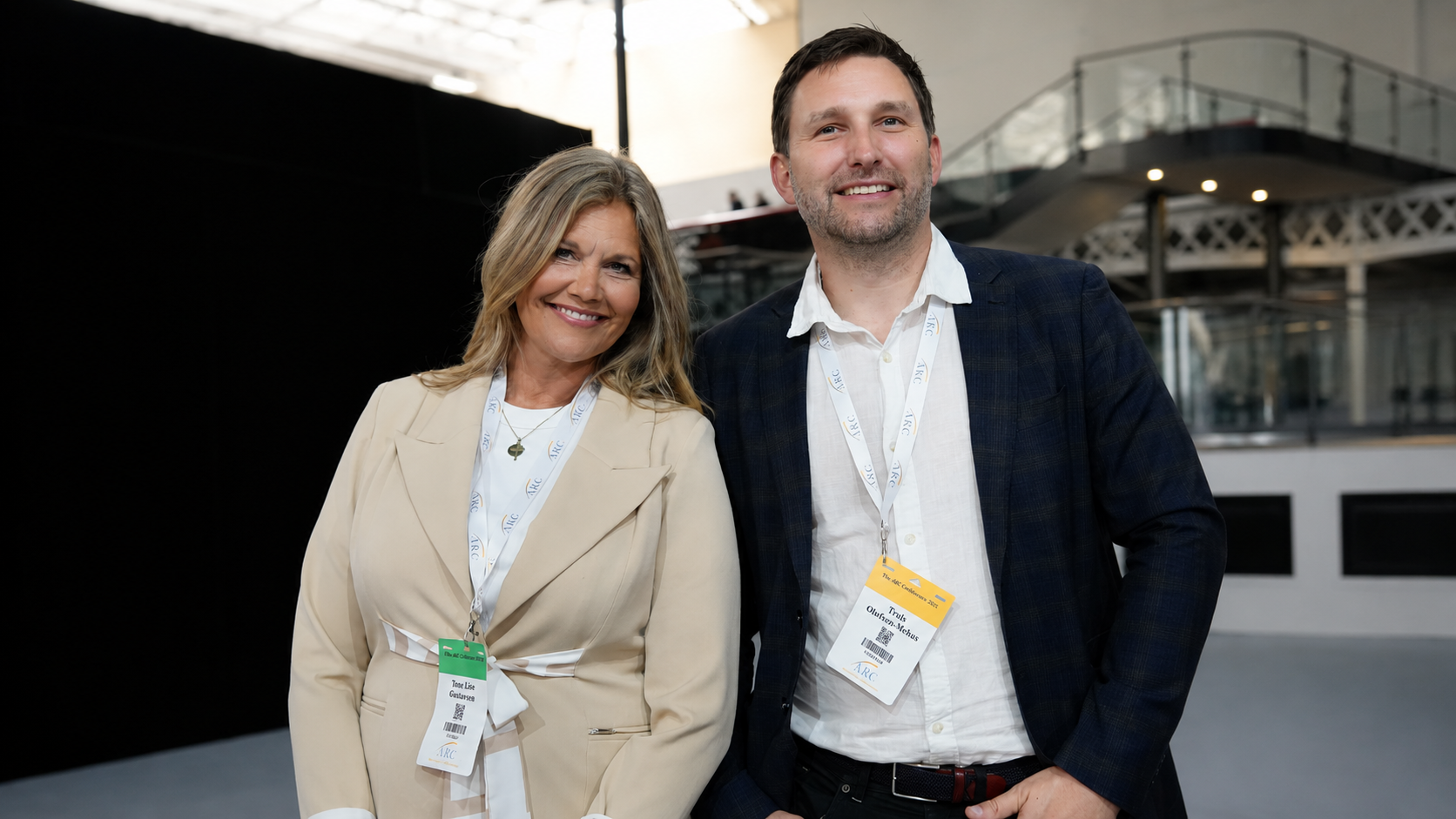
Peter Risholm writes together with Helén Rosvold Andersen from Parents.net in Subject about misinformation about gender in Norwegian textbooks. Read the post here:
The head of the Family and Culture Committee, Grunde Almeland (V), is "scared" by parents who believe that gender is biologically determined. Instead, we have a number of textbooks that tell our children that gender is something you "feel.".
Representative of the Parliament, Grunde Almeland (V) is "scared" by us parents who believe that schools should classify gender biologically, and not as emotions. He said this himself on the NRK program Politisk kvarter on December 15th.
For our part, we find it more worrying that the head of the Family and Culture Committee cannot explain what gender is.
This shows how important it is that schools convey a true narrative about gender.
Everyone agrees that students who struggle with their experience of their own gender should be taken care of. What we disagree about is how gender should be classified.
State Secretary at the Ministry of Education, Synnøve Skaar (AP), says in the same program that it is not in the curriculum that children should choose their gender. She is right, but she seems uninformed about what is actually in the new textbooks.
That gender is based on emotions rather than a biological reality is reflected in the new textbooks. In the science textbook Solaris from Aschehoug, students in the third and fourth grades are asked to think about how they feel as a boy, a girl, neither or both – with the implication that gender is a feeling. This is repeated in Social Sciences 4 from Cappelen Damm, where we are presented with a character who does not know whether they are a boy or a girl.
In Gyldendal's science book, "Refleks 4" intersex is presented as a third gender category. It is not. These are very rare differences of sex development, which are medical diagnoses.
The same book tells students that it can be difficult to figure out what gender you are because you don’t feel like your biological sex, that there is a diversity of genders among people, and that gender is determined by identity rather than biology. This representation of gender is confusing at best.
In Parents.net we believe that when teaching about gender, the teaching must be rooted in biology. Gender is a biological mechanism for reproduction, and we are all male or female. It is of course possible to convey, with regard to the age of the students, that there are people with gender dysphoria, but telling children that you are assigned a gender at birth, or that the gender you are assigned may be wrong because the doctor does not know what you feel like, is not responsible.
Grunde Almeland also claims that children do not become «gender confused» by learning about gender as multiple emotions. But he does not know this. And in recent years there has been an enormous increase in children and young people who define themselves as trans, and who also seek treatment – without us knowing why. The proportion of children and young people who regret irreversible operations is also increasing significantly.. It is therefore worrying that textbooks uncritically promote an understanding of gender reassignment as unproblematic – without any examples of people who regret their medical treatment.
Teaching that ignores biology as the defining factor of gender downplays the physiological differences between girls and boys, and women and men. Such a disregard for biology helps to blur the necessary distinctions between the sexes, which, for example, means that men should not be included in women’s sports. We must take into account that gender is material if girls are to be allowed to develop in the same way as boys.
While we challenge gender roles and stereotypes, we must acknowledge biology. In order for the distinction between the sexes not to be an obstacle, it must also be respected.
Therefore, we will ask Grunde Almeland and Synnøve Skaar the following questions:
If we agree that men and women are two distinct categories: What physiological differences or objective criteria, if any, determine whether you belong to one category or the other?