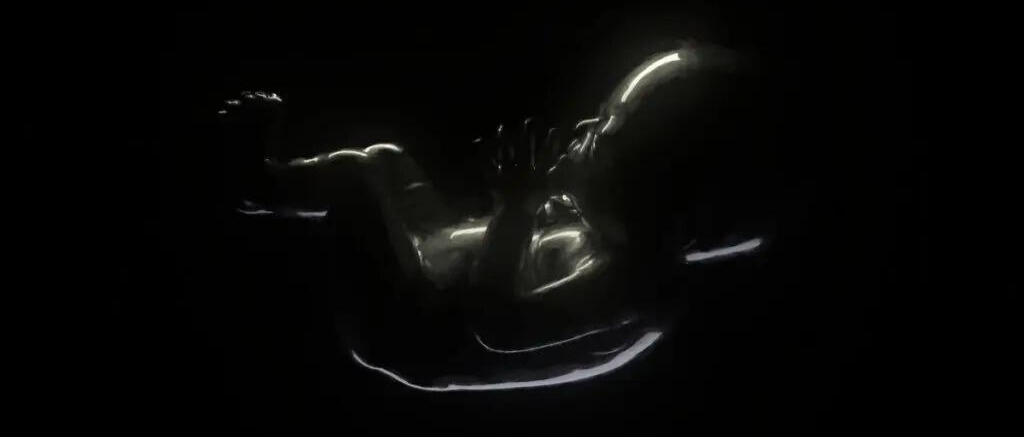
Abortion is a topic that arouses strong emotions and opinions, and unfortunately there are many myths surrounding this important and relevant value issue. As Christians or pro-life activists, we must expose these myths for what they are, and contribute to deeper reflection on the value of life. Important political processes and decisions are now being made at the highest level, without the discussions being held at the depth we owe all Norwegians and their children. This happens without people seeing pictures and videos of what is actually taking place inside the mother’s womb.
Here are some of the most common misconceptions and myths surrounding abortion:
1) “It is not a human being, therefore no one dies.”
This myth is perhaps the most basic, but it goes against both scientific and biblical understanding. Science confirms that from the moment of fertilization, there is a unique human life with its own distinct DNA that belongs to a new person, completely different from both the mother and the father. Thus, this new life is scientifically not a part of the woman`s body. It is not “just a lump of cells,” an embryo, a fetus, or other terms – it is always a human being at various stages of development.
Science confirms the Bible, which emphasizes that human life is sacred from conception (Psalm 139:13–16), and that God knows us even in the womb. To dismiss an embryo or fetus as “not a human being” is a serious misunderstanding of both biology and God’s creation. It is therefore a myth that no human being is involved when abortion is carried out through an induced medical intervention.
2) “Abortion saves lives.”
It is often claimed that abortion saves the mother's life, but statistics show that cases where abortion is necessary to save a mother's life, are extremely rare in modern medical practice. At the same time, the life of the fetus is systematically overlooked. As Christians, we believe that both lives – both the mother’s and the child’s – have infinite value, and the solution should never be to end an innocent life through abortion. In the tragic situastion where the life of the mother is at serious risk, medical efforts are generally directed toward saving her life, but this does not justify abortion as a general practice. most common It is a myth that abortion saves lives, because only a very small fraction of cases are even argued on these grounds.
3) “Abortion is a human right.”
The idea that abortion is a human right has no basis in historical human rights philosophy. The international community has largely agreed that the right to life as a fundamental human right – for everyone, including the most vulnerable and the unborn. Redefining this as a right to end a life is a gross distortion of what human rights are all about.
Nevertheless, the UN and WHO have stated that abortion can be viewed as part of “sexual and reproductive rights.” The WHO argues that abortion must be available to all in order to meet the UN’s Sustainable Development Goals 3 and 5, under the claim that “abortion saves lives.”
4) “Since nature or God causes miscarriages, abortion is morally acceptable.”
a) It is true that a proportion of fertilized eggs do not develop to birth. But comparing miscarriages – which occur naturally or without human intervention – with induced abortion is to compare two fundamentally different realities. Miscarriage is a natural event, while induced abortion is a deliberate human act. As Christians, we are called to protect life, not take it.
b) In addition, researchers do not agree on the proportion of spontaneous miscarriages, because it is impossible to study this with certainty. This has led to exaggerated claims, such as that half (or even up to 85%) of pregnancies end naturally. These figures cannot be verified. While miscarriage does occur, its frequency is uncertain. See point 4a) to understand why spontaneous miscarriage and induced abortion do not share the same moral framework.
5) “A child is not valuable until the woman herself attributes value to it.”
This myth places the value of life in the hands of subjective feelings and opinions and is not a sustainable way to govern a country. Human dignity is not dependent on the judgment of others, but is inherent in everyone. Every life is valuable because it was created by God, not because someone else decides it is valuable by a political majority, or by a UN body. When we place the value of human life on such a subjective scale, we open the door to serious moral transgressions. History shows us the consequences of dehumanizing certain groups.
By exposing these myths, we can help promote a culture that truly respects and values life from conception to natural death. The abortion issue is not just a pro-life issue; it is an issue of human dignity and God's will for his creation and testifies to the prevailing view of humanity in the population.
6) “If you remove the right to abortion, the same number of people will still have abortions.”
History shows otherwise. In countries and states where abortion rights have been restricted, abortion rates have actually declined. Arguing that we should allow something ethically wrong because it will happen anyway ignores our ability to shape a life-preserving society. And it has been a hallmark of Christian societies to preserve and respect life, because all life is created with a purpose by our God. By focusing on alternatives such as support for pregnant women, intensifying educational work, and sexual morality, we can reduce abortion rates while building a society that values both mother and child.
Attempts to compare abortion rates in developing countries with those in developed nations are misleading. In a highly developed country like Norway, abortion rates have remained remarkably stable for nearly 50 years, despite strong welfare systems and widespread respect for the inviolability of human life after birth. We believe that moral education and medical transparency – including requiring that pregnant women are offered an ultrasound before making a final decision – would significantly reduce abortion rates. Seeing the life growing in the womb changes perception.
7) “Those who have abortions are vulnerable women, victims of rape or assault.”
While it is important to approach all those who have experienced traumatic events with empathy and care, these cases only represent a small proportion of the total abortions performed. Most abortions are not due to rape, incest or abuse, but for socio-economic or other personal reasons. Nevertheless, the fetus is still a human being with the right to life, regardless of how it was conceived.
Vulnerable women need care, support and alternatives, not a solution that involves the loss of another human life. It is not natural to think that an innocent child should have to die because it has a criminal father who has committed a heinous and illegal act.
This is a deeply sensitive issue. While it can be discussed in principle, emotionally charged situations often hinder dialogue. It may therefore be wise to acknowledge the difficulty of this scenario while focusing discussions on the vast majority of abortion cases, where such circumstances do not apply.
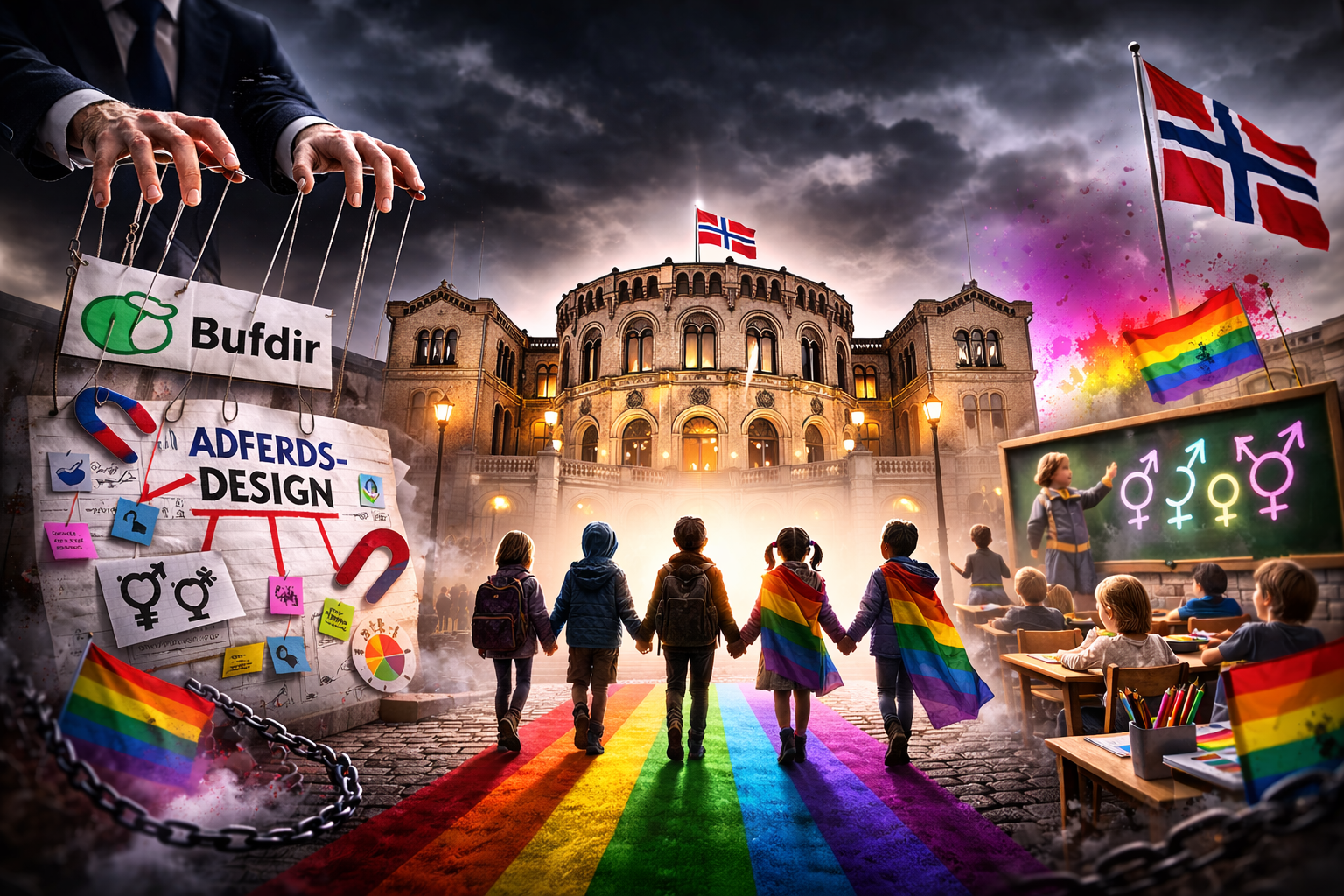
It has recently emerged that Bufdir (the Norwegian Directorate for Children, Youth and Family Affairs) will spend several million kroner on a project in which behavioral design is one of the methods. The goal is to influence public…
Over 1 million people have watched the video where we addressed sexualized activities in kindergartens. Now we follow up with a thorough review of why this is happening – and what food for thought…
There are just over 200 so-called NACS-approved sexologists in Norway who are referred to as experts on gender and sex in the prevailing doctrine that is based on sex-positive philosophy, queer theory and sexually liberal sexology. …
In this podcast episode, Truls Olufsen-Mehus and Tone Lise Gustavsen delve into the complexities of sex education, with a particular focus on new approaches that need to be adopted in the public…
Pornography is often described as a private choice with no consequences for others. In public debate, it is often presented as neutral entertainment, or as an individual need that does not concern the relationship one is in…
Many people today grow up with the understanding that sexual orientation is something fixed and unchangeable – closely linked to one's own self-perception and feelings. This way of thinking characterizes…